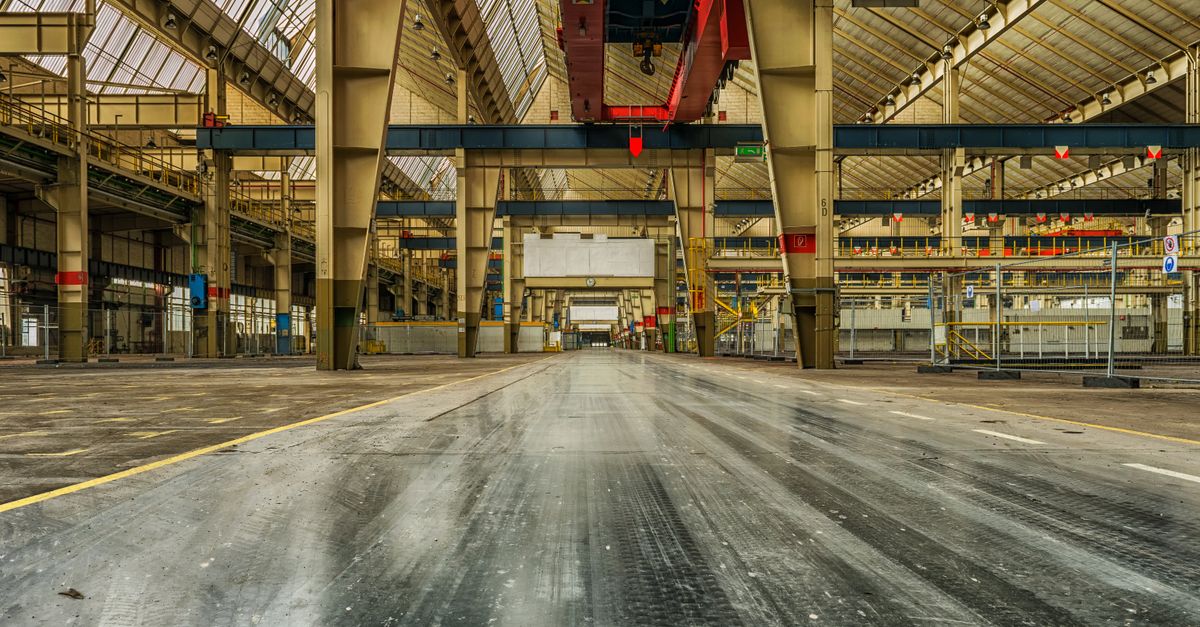
In a traditional warehouse, goods arrive, are put away on a shelf, sit there for days or weeks, and only then are picked to leave. Cross-docking starts from almost the opposite idea: what if the goods barely stopped at all? What if, instead of being stored, they were routed almost directly from the receiving dock to the shipping dock?
That is exactly what cross-docking does. It is a logistics strategy in which incoming products are sorted and forwarded to outbound vehicles with little or no storage in between. The warehouse stops being a place to keep things and becomes a passage point — a hub where goods change trucks, not state.
This article explains how cross-docking works in practice, in which situations it really pays off, what it takes to do it well, and where it usually goes wrong. At the end, there is a short case with plausible numbers to make the idea concrete.
What cross-docking actually is
The name comes from moving goods across the dock: they come in on one side and leave on the other, without going through the put-away stage. The goal is to reduce three things at once — storage cost, the number of times goods are handled, and the time a product takes to reach the customer.
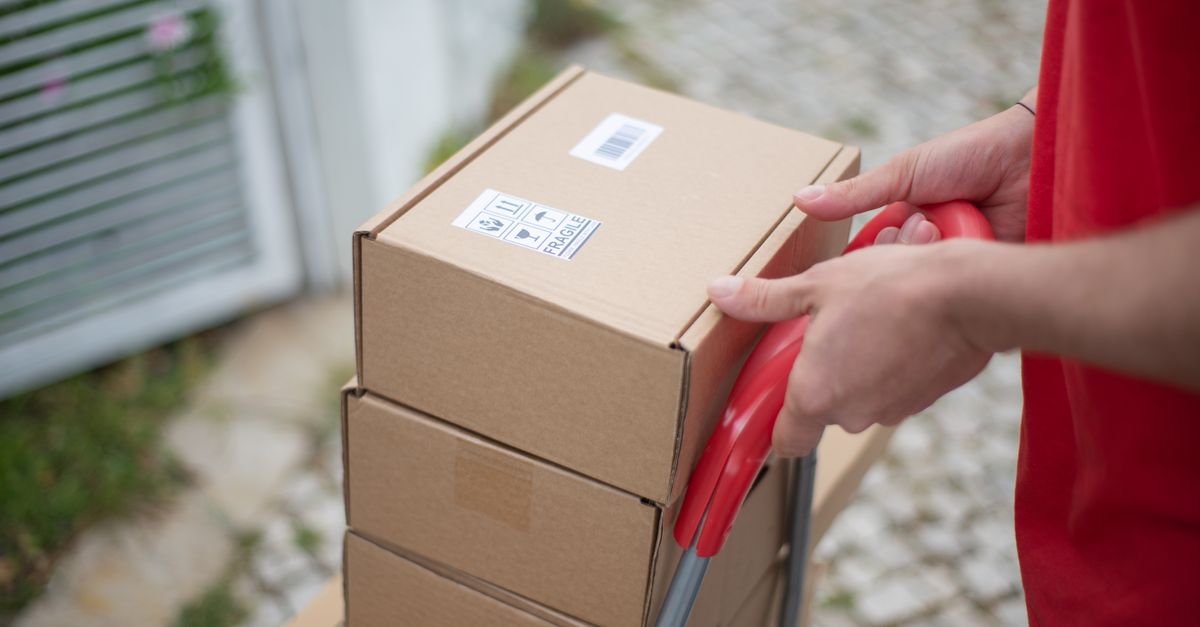
In classic warehousing, stock acts as a cushion: you keep product to meet demand whenever it appears. In cross-docking, that cushion almost disappears. The goods coming in already have, from the start, a known destination, and the centre's job is to route them quickly and without errors. It is a logic of flow, not of accumulation. Put differently, the warehouse earns its keep by how fast goods move through it, rather than by how much it can hold at any moment.
How it works, step by step
Although it varies from operation to operation, cross-docking almost always follows the same sequence:
- Receiving: inbound vehicles arrive and the goods are unloaded at the receiving dock.
- Sorting: each pallet or box is identified and matched to its destination — a store, a customer, a route.
- Routing: instead of heading to a shelf, the goods cross the platform to the matching shipping dock.
- Consolidation: items with the same destination are grouped, often with products from other origins, to form a complete load.
- Shipping: the load leaves on the right vehicle, at the right time.
All of this happens within hours, sometimes minutes. That is why cross-docking is, above all, an exercise in synchronisation: what comes in and what goes out must be coordinated in detail.
Cross-docking versus traditional warehousing: the essential difference
The difference is not only operational, it is strategic. Warehousing trades stock cost for safety: having product available protects against the variability of demand and deliveries. Cross-docking trades that safety for speed and for a much lower holding cost.
That trade-off has consequences. Without stock acting as a cushion, any failure — a late supplier, an occupied dock, a sorting error — spreads immediately to the delivery. Cross-docking pays off handsomely when everything goes well, but it is less tolerant of surprises than a warehouse with reserves.
The main types of cross-docking
- Pre-distributed: the supplier already sends the goods separated by customer or by store. The platform simply redirects, without touching the contents of the pallets.
- Consolidation: loads from several origins with the same destination are combined, to fill a vehicle and reduce trips.
- Deconsolidation: a large load is split into smaller deliveries, each for its final point.
Most operations combine these modes depending on the type of product and the customer. The common thread is always the same: the goods do not rest on a shelf.
When it pays off — and when it does not
Cross-docking shines under specific conditions: fast-moving products, relatively predictable demand, reliable suppliers and volumes that justify the coordination. It is almost natural for perishables, where every extra hour in the warehouse is lost quality, and for fast-turnover consumer goods, where demand is steady enough to plan the inbound and outbound flows around each other.
By contrast, it is a bad idea when demand is erratic, suppliers are unreliable, products require inspection, assembly or customisation, or volume is low. In those cases, forcing cross-docking swaps the safety of stock for a risk you cannot control, and the result is usually trucks leaving half-empty or failed deliveries.
What it takes to work
Physically, cross-docking looks simple: docks, a sorting space and forklifts. In practice, what sustains it is information. Without knowing, in advance and reliably, what will arrive and when, no synchronisation is possible.
- Advance shipping notice (ASN): knowing the contents and estimated time of each delivery before it arrives.
- A warehouse management system (WMS) able to direct sorting in real time, often with barcode or label scanning.
- Supplier discipline: schedules kept and goods well identified on arrival.
- Dock and yard capacity sufficient to receive and ship without congestion.
- Scheduled transport so that outbound vehicles are ready when the load is.
Notice that the flow of information is as important as the physical flow. That detail is what separates a cross-docking platform that works from a chaotic warehouse without shelves.
Short case: a regional food distributor
A regional food distributor, with around 150 clients among grocery stores and restaurants, operated on a platform of roughly 2,000 square metres. A good part of the fresh products came in during the morning and stayed one or two days in cold storage before leaving — long enough to compromise shelf life and take up precious space.
The company moved its fastest-moving fresh lines to a cross-docking model: suppliers delivered with the goods already organised by route, and the platform consolidated and shipped the same day. The average time between receiving and shipping for those lines fell from about 26 hours to close to 6, and the cold-storage space freed up was around 30%, which was reused for new ranges.
Not everything was smooth. Two suppliers with unreliable schedules caused outbound trucks to leave incomplete, until those items were given a small safety reserve instead of pure flow. The lesson stuck: cross-docking does not eliminate stock by decree; it applies where the conditions allow, and the technique rewards preparation far more than good intentions.
Common mistakes to avoid
- Applying it to everything: treating cross-docking as a general rule, instead of reserving it for the right lines.
- Ignoring supplier reliability: without punctual, well-identified deliveries, the flow breaks.
- Underestimating data: moving ahead without advance shipping notices or a sorting system is a recipe for chaos.
- Too few docks: platforms without the capacity to receive and ship at the same time create queues and delays.
- Not measuring dock times: without tracking the time between receiving and shipping, it is impossible to know whether it is working.
In practice
Cross-docking is not a warehouse without shelves; it is a discipline of synchronisation. Done well, it cuts holding cost, reduces handling and shortens the time to the customer. Done badly — on the wrong products, with unstable suppliers or without data — it quickly turns into confusion. The sensible path is to start with a few predictable, high-turnover lines, measure dock-to-dock time rigorously, and keep a minimum reserve where reliability is not yet there. From then on, let the results decide how far it is worth taking the flow.